
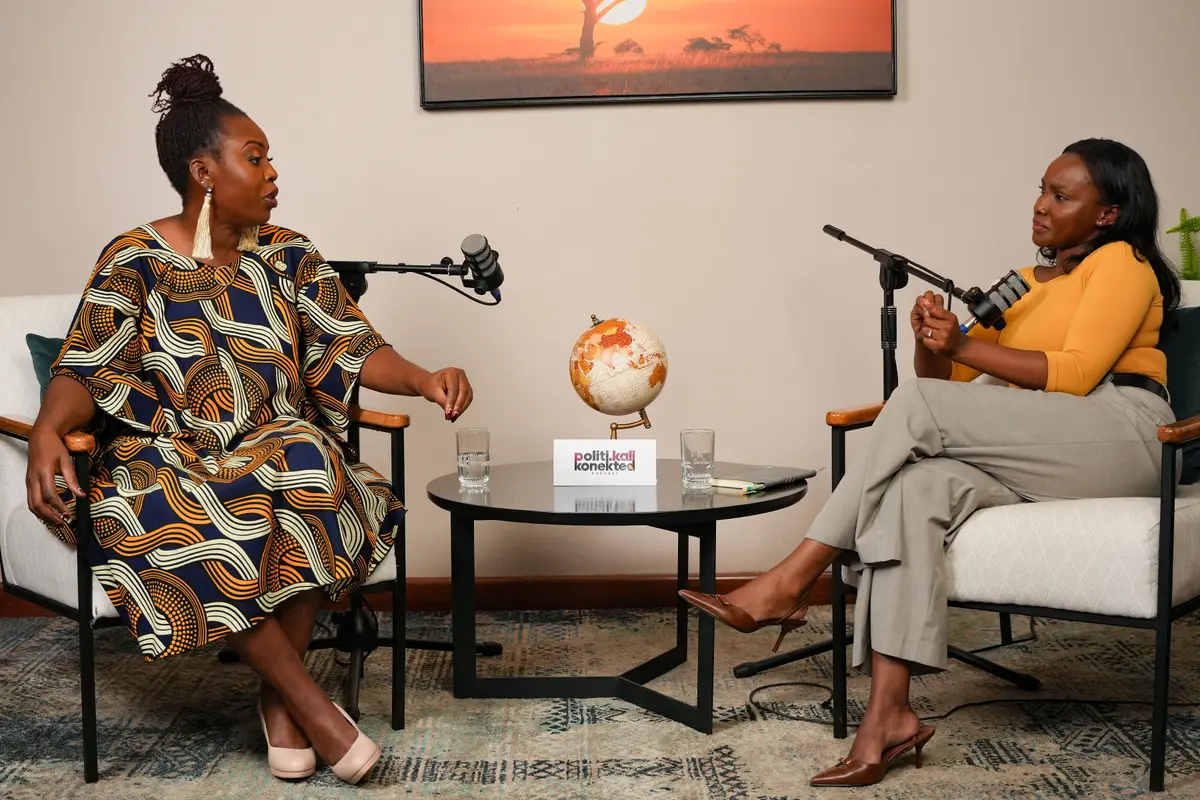
When Pollyne Owoko walked into political meetings uninvited at the age of 23, she was told to leave. She stayed. When the women’s movement said she was too young, and the youth movement said she was too female, she planted herself firmly in both. When people laughed at her for running for a Member of Parliament seat at 24, she ran anyway.
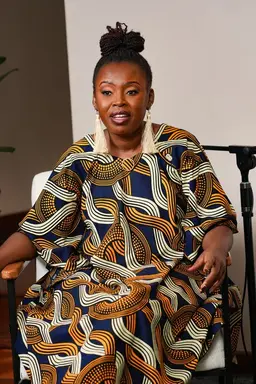
In a wide-ranging conversation on Politikali Konekted with host Diana Ngao, Owoko – now a veteran advocate for women and youth in Kenyan politics – sat down to unpack the structural, social, and personal forces that continue to keep women on the margins of political power. What followed was one of the most frank and energizing conversations the podcast has hosted.
The Double Trap: Young, Female, and Unwanted in Every Room
Owoko opened by naming something that many young women in politics feel but rarely hear acknowledged out loud. Entering politics as a young woman means being rejected twice. The women’s movement says you are too young. The youth movement says go to the women. You are tossed between them until you stop waiting for an invitation.
“Young women are marginalized within the women’s movement. The youth will say, ‘You are a woman, go to the women’s movement.’ The women say, ‘You are a youth, go to the youth movement.’ So you’re just being tossed left, right, center.”
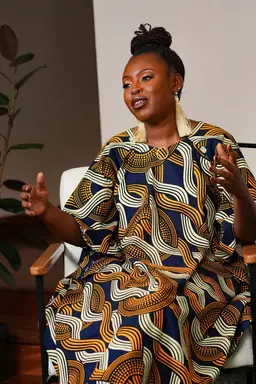
Her response was to become a nuisance. She barged into meetings. She refused to be chased away. She insisted on belonging in every room at the same time, until the older women stopped trying to remove her and started saving her a seat. Her message to every young woman watching: be you, do it your way, because there is no arithmetic for politics.
A System Built to Exhaust You
One of the sharpest moments in the conversation came when Owoko described the impossible timeline society builds for women who want to lead. It is engineered to ensure there is never a right time.
“If you’re not married, they’ll ask you, ‘Why don’t you go and start a family?’ If you’re married and you don’t have children, they tell you, ‘Go and have children first.’ Then when you have those children, they tell you, ‘Your children are still young, go nurture them.’ Then when they’ve grown, they say, ‘You are now too old to take this seat!'”
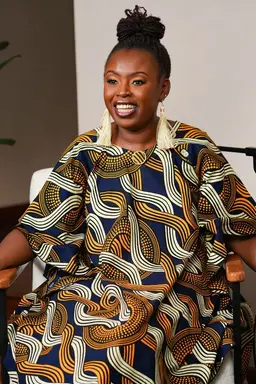
“It is a system that sabotages women. And it is a social system.”
Add to that the financial barriers. Owoko pointed out that for years, women could not open a bank account without a husband’s signature. Banks still ask women about their marital status and number of children in ways they do not ask men. The constitution’s guarantee of equal property rights means little when the social infrastructure around finance still treats women as dependents.
And politics, as she reminded the audience, is ultimately about money and resources.
The Root Is in the Home
Owoko did not stop at the institutions. She turned the lens inward, arguing that the conditioning that limits women in public life begins at the kitchen table, with mothers themselves.
She described how the assignment of household roles in childhood builds a worldview that boys carry silently into adulthood. Boys are never handed younger siblings to care for. They are told not to cry. They grow up believing that nurturing, cooking, and domestic labour are not their concern. And then those boys become the men who sit across from women at negotiating tables and conclude that women have not done enough to deserve a seat.
The good news, she noted, is that this is shifting. Households now exist where cooking rosters include fathers. Where boys are given dolls. Where emotions are not policed by gender. Those homes, she argued, will produce different human beings.
Femicide: A Crisis Hidden in Plain Sight
The conversation took a serious turn when Diana raised the numbers. A report by the Heinrich Boll Foundation documented 220 women lost to femicide in a single year. The Ministry of Gender reported 10,000 child protection cases in just the first quarter. 44,000 children are currently in government custody with no trace of their parents. Owoko was unsparing. She pointed to the revelation that approximately 23 of the individuals pardoned by President Ruto in a recent clemency exercise were sexual offenders.
“How do you pardon a sex offender? Because then they will repeatedly do it. They don’t stop. There is something not right with them, and these people, before they are reintroduced into society, need to go through therapy.”
She called for rehabilitation before reintegration, and placed responsibility squarely on female political leaders to treat gender-based violence as an urgent legislative priority. A presidential task force was formed. It produced a report. The report was made public. Then nothing happened.
One Rule for Men. Another for Women.
The conversation moved into the arena of double standards. Diana raised the case of nominated senator Karen Nyamu, widely criticized for sexualizing a minor in parliament, alongside the moment President Ruto pinched Gloria Orwoba’s cheek at a public event, and it was dismissed as a joke.
Owoko’s response was precise:
“The bar that men are given is a very different bar. It is low. But women are given a very high morality bar!”
She did not excuse Karen Nyamu. But she noted that the intensity of the backlash was inseparable from the fact that a woman had done it.
On the Gloria Orwoba moment, Diana put the hypothetical directly: what would have happened if it were the other way around? Owoko’s answer: she would have been arrested.
Violence Is Part of the Job Description. It Should Not Be.
Both women spoke from personal experience about the physical reality of campaigning as a woman in Kenya. Diana described being shoved off a podium at an ODM rally in Kajiado in 2022, losing her shoe in the crowd. She described being lifted, jostled, and passed through bodies just to reach a speaking platform – an experience where not everyone reaching for her had good intentions.
Owoko recalled being chased out of meetings by political rivals in her early campaign days and being caught in teargas at a Linda Mwananchi rally in Kitengela. She described standing on top of Senator Hon. Sifuna’s car, next in line to speak, as the crowd scattered and was pulled into a vehicle just in time. Her advice was not to normalize the danger, but to be strategic about it: avoid confrontation, read the situation, and find the exit.
Two-Thirds: A Constitutional Promise Still Waiting
Kenya’s two-thirds gender principle has been in the constitution since 2010. Fifteen years later, it remains unimplemented. Petitions to dissolve parliament have been filed and set aside. The political will has simply never arrived.
Owoko argued that change has to start at party primaries, where women are consistently rigged out. But she also challenged women to change how they engage. Women are the backbone of political mobilization in Kenya. They turn out the crowds. They do the groundwork. And they go home without demanding anything in return.
“Women need to start learning the art of negotiating. The art of positioning. The art of occupying the space. Because no man will call you and tell you, ‘wamama sasa kujeni, hii space ya 30% ndio hii!’ You have to work towards occupying that space.”
Diana pushed back: even when women do the work, men at the negotiating table find reasons to exclude them. Owoko agreed.
But she held both truths at once. The system is rigged. And women still have to show up and demand, loudly and strategically, what the constitution already guarantees them.
Pollyne Owoko has been in Kenyan politics for over two decades. She has been chased, teargassed, tossed between movements, and told in every possible way that the space is not for her. She is still here.
That, perhaps, is the most powerful thing she said in the entire episode. Not in words, but in the fact of her continued presence.